A Broken World
This collection emerged during a time of escalating political tensions. Political conflicts—both in the U.S. and abroad—seem driven by fear of the future, intensified by widening economic inequalities and increasingly frequent natural disasters. The prevailing mood suggests more turbulence ahead. We are confronted with the possibility that the relative stability we relied on in past decades may be slipping away.
The classic landscapes I initially pursued felt inadequate—too serene. This prompted deeper questioning: can feelings of instability and impending change be expressed through the landscape genre?
Traditional landscape photography often embodies an Edenic aesthetic, selecting and framing natural subjects to suggest harmony and transcendence, typically in the absence of human traces. More recent approaches subvert this ideal by revealing the negative impact of human activity—abandoned infrastructure, pollution, detritus—offering a more conflicted vision of humanity’s relationship with the natural world. These modern depictions reflect a reality where access to unmediated natural beauty is increasingly rare.
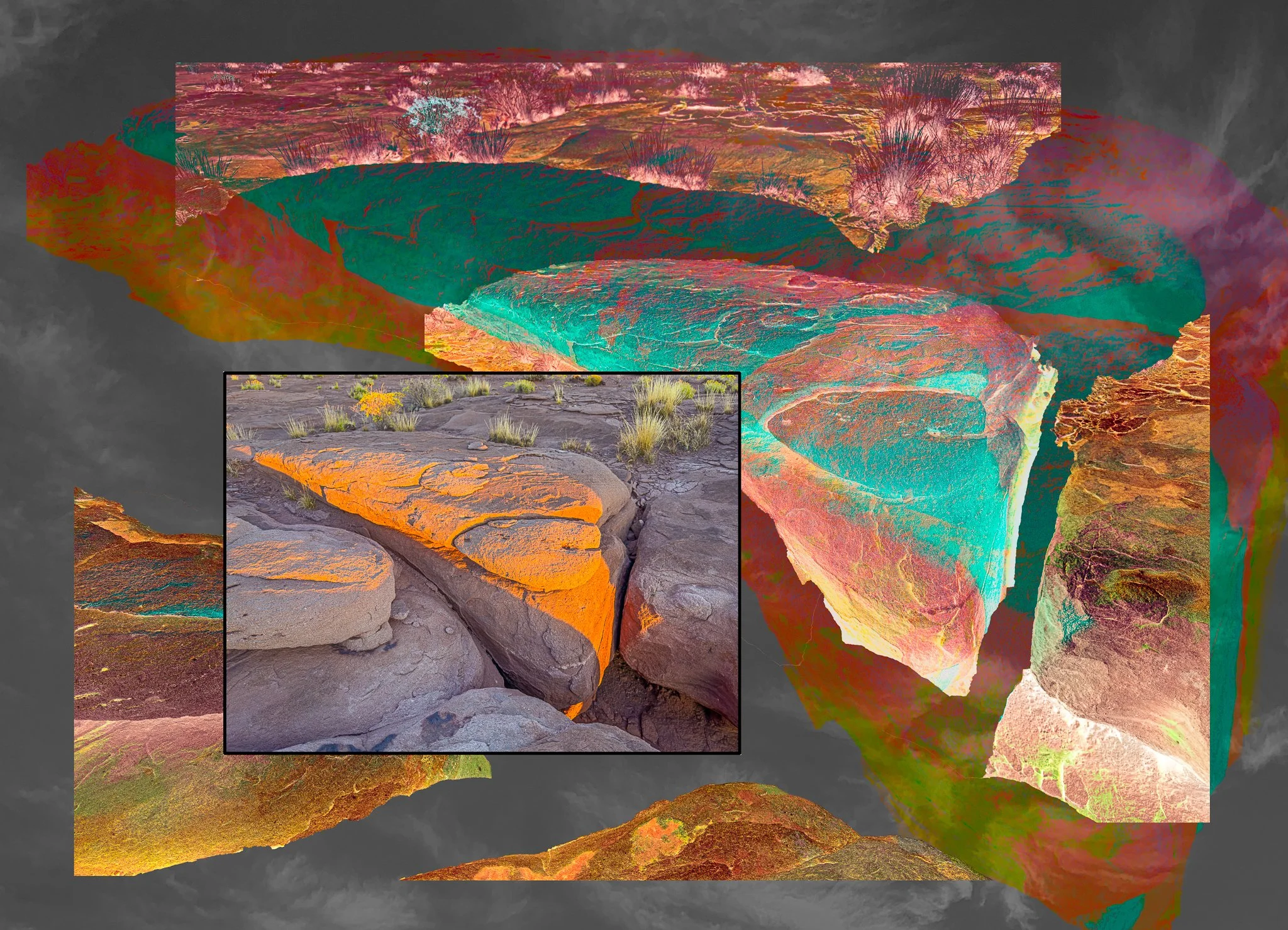
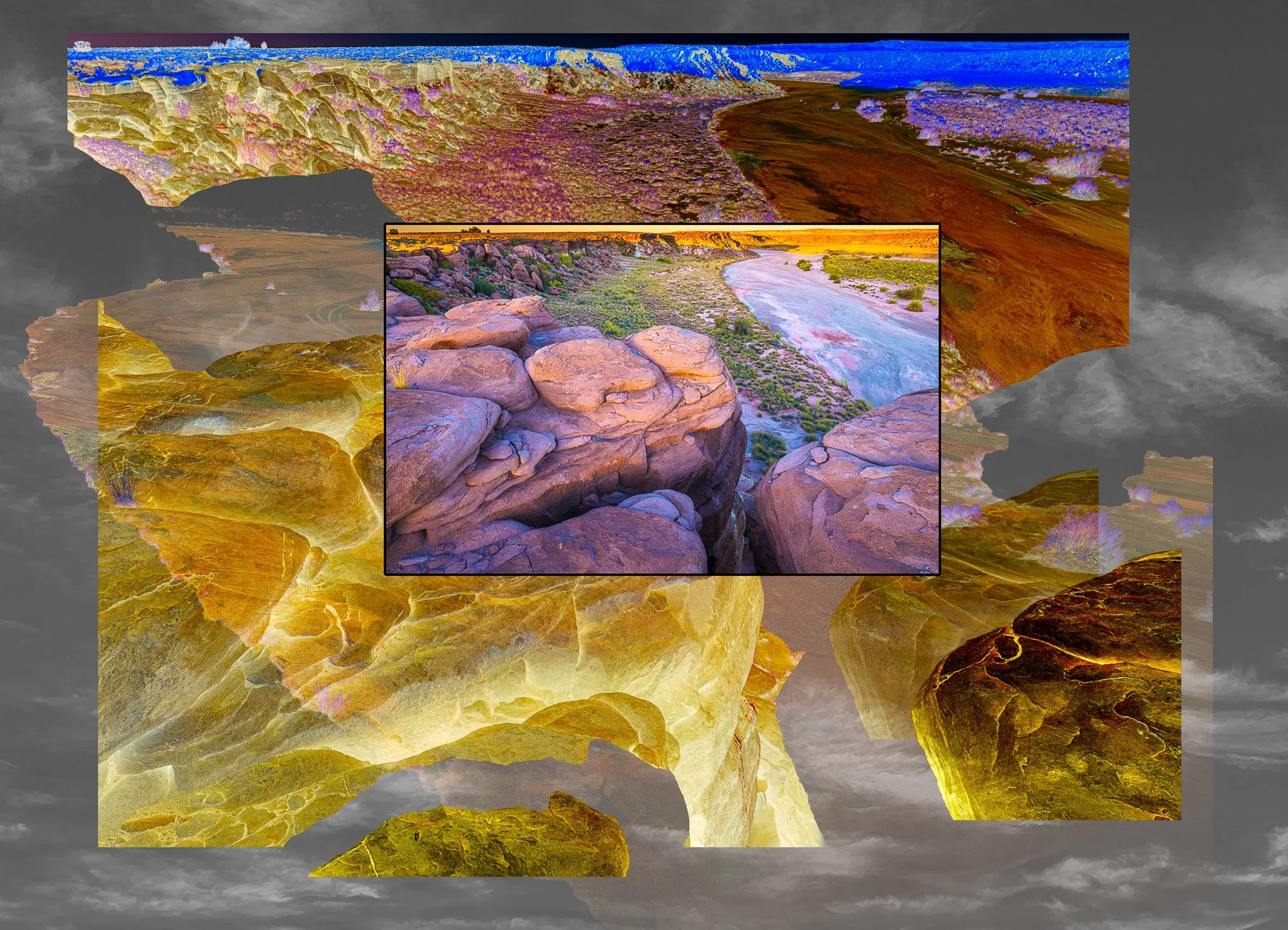
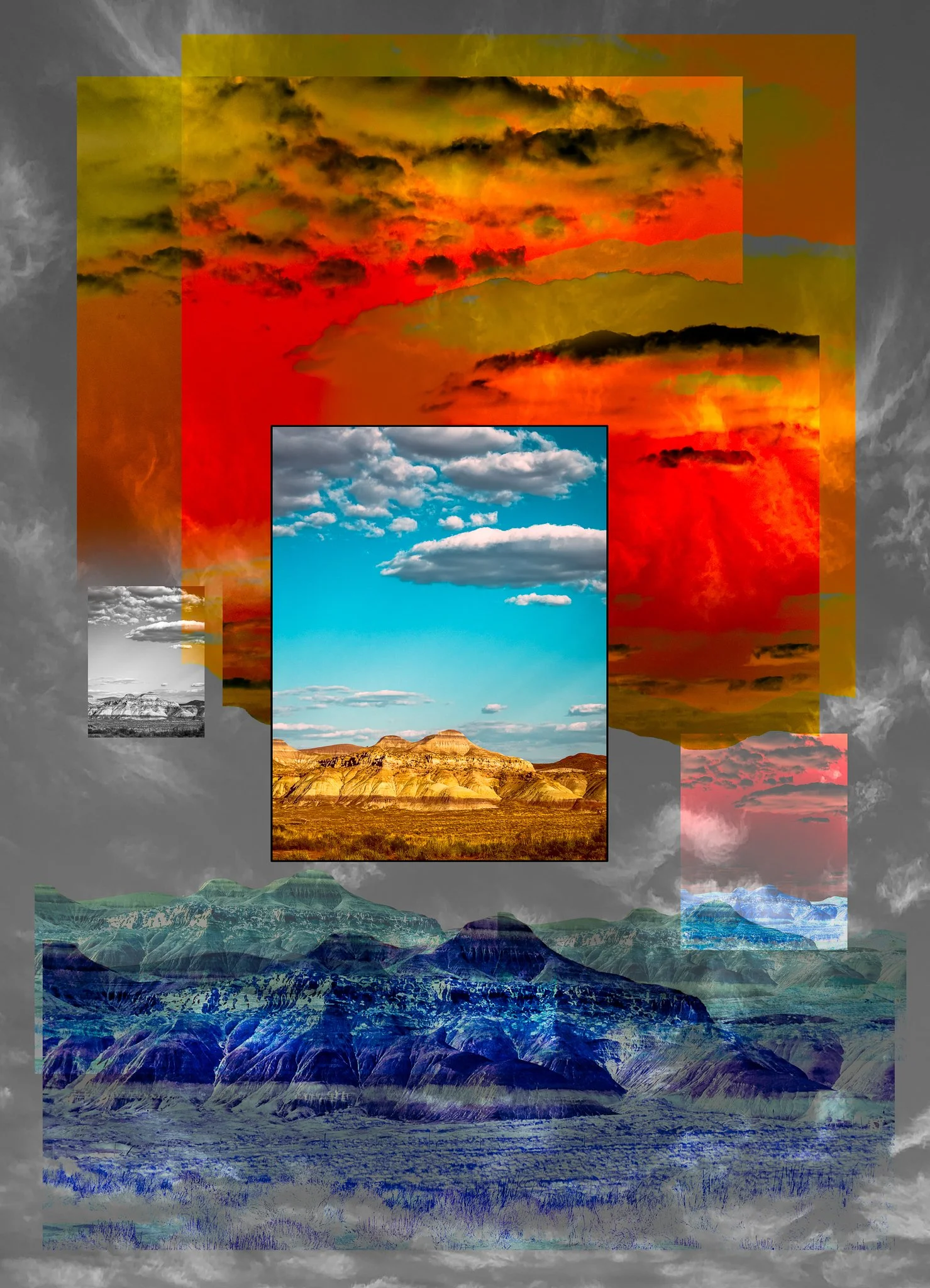
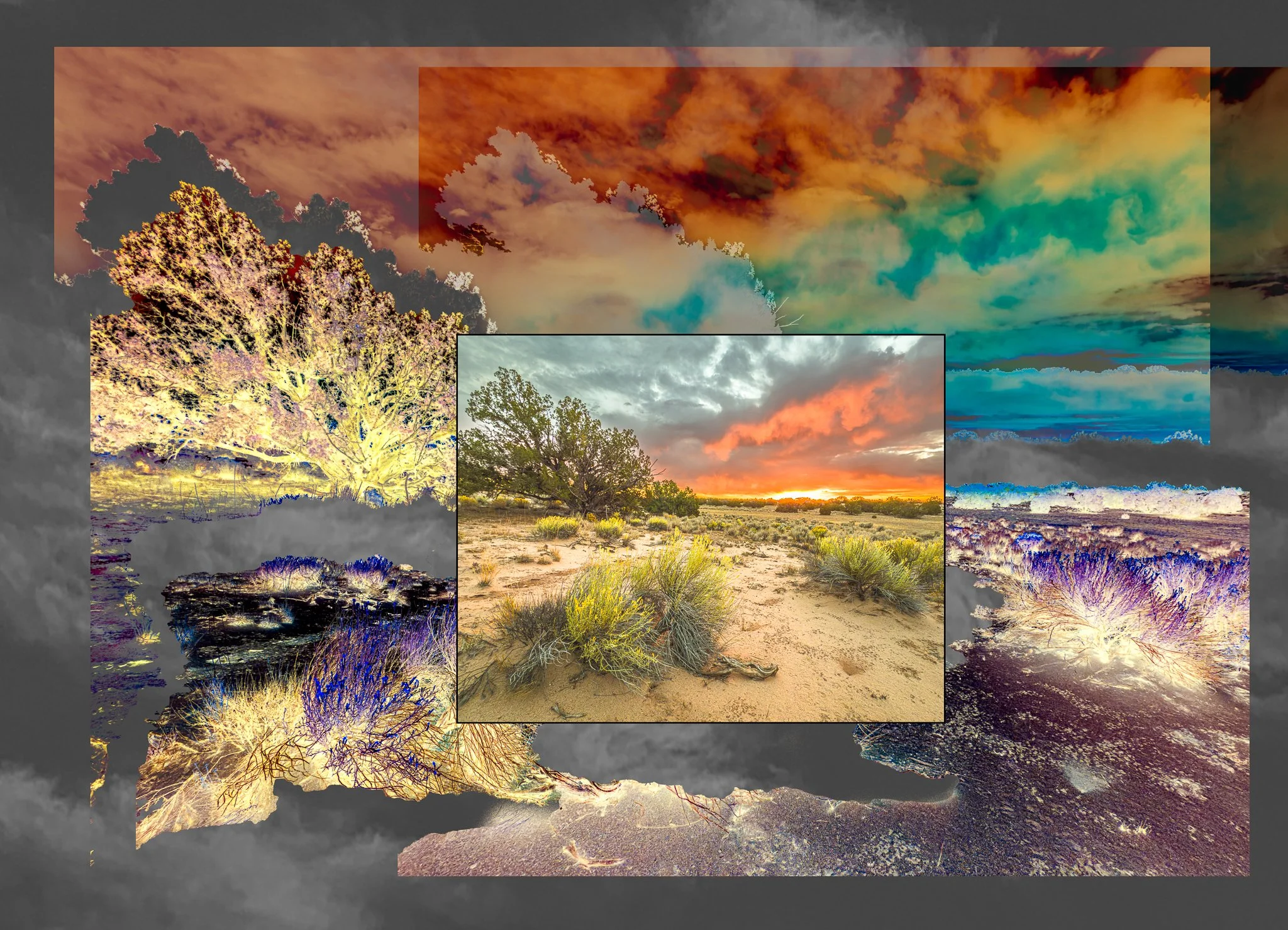
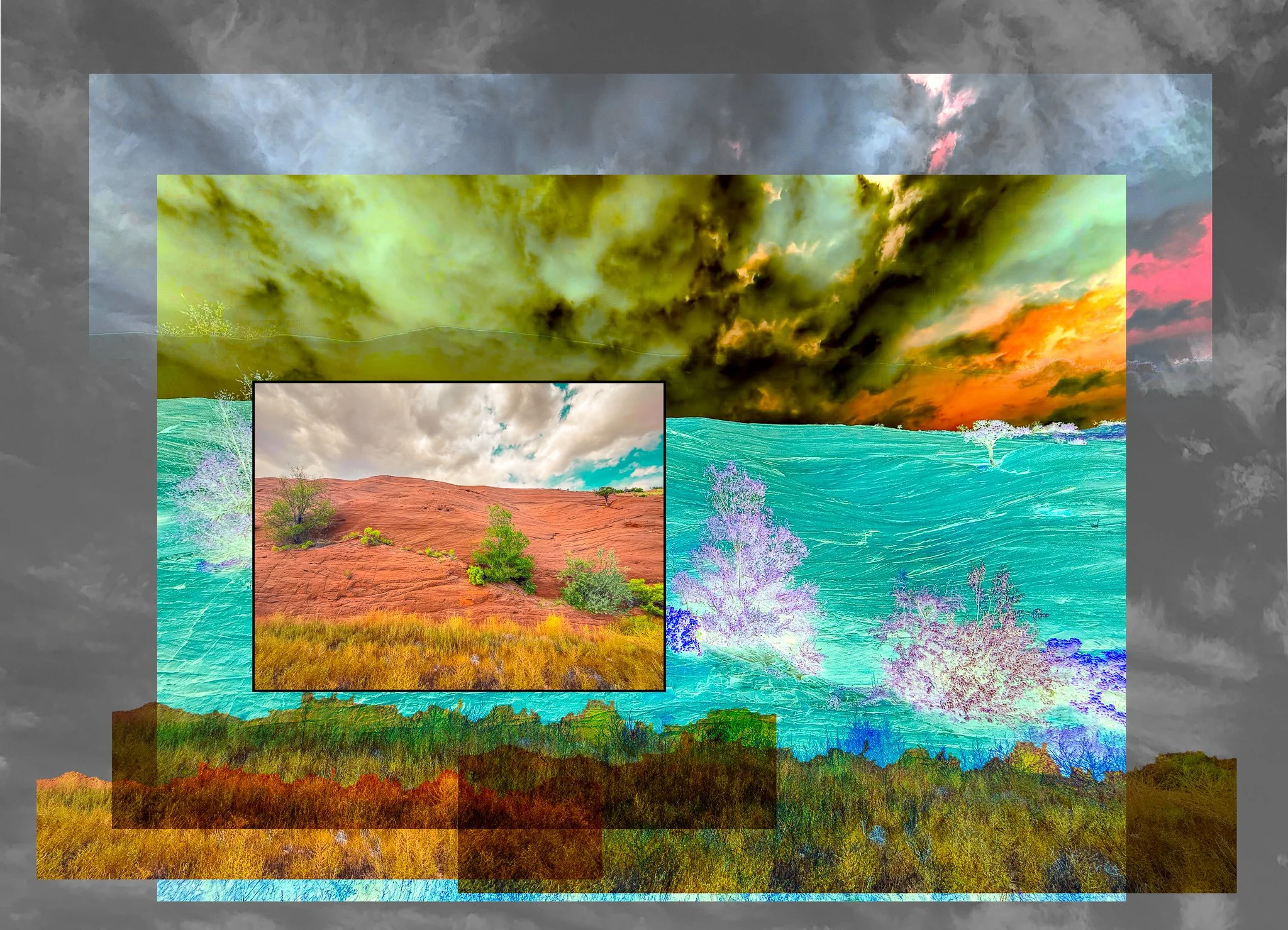
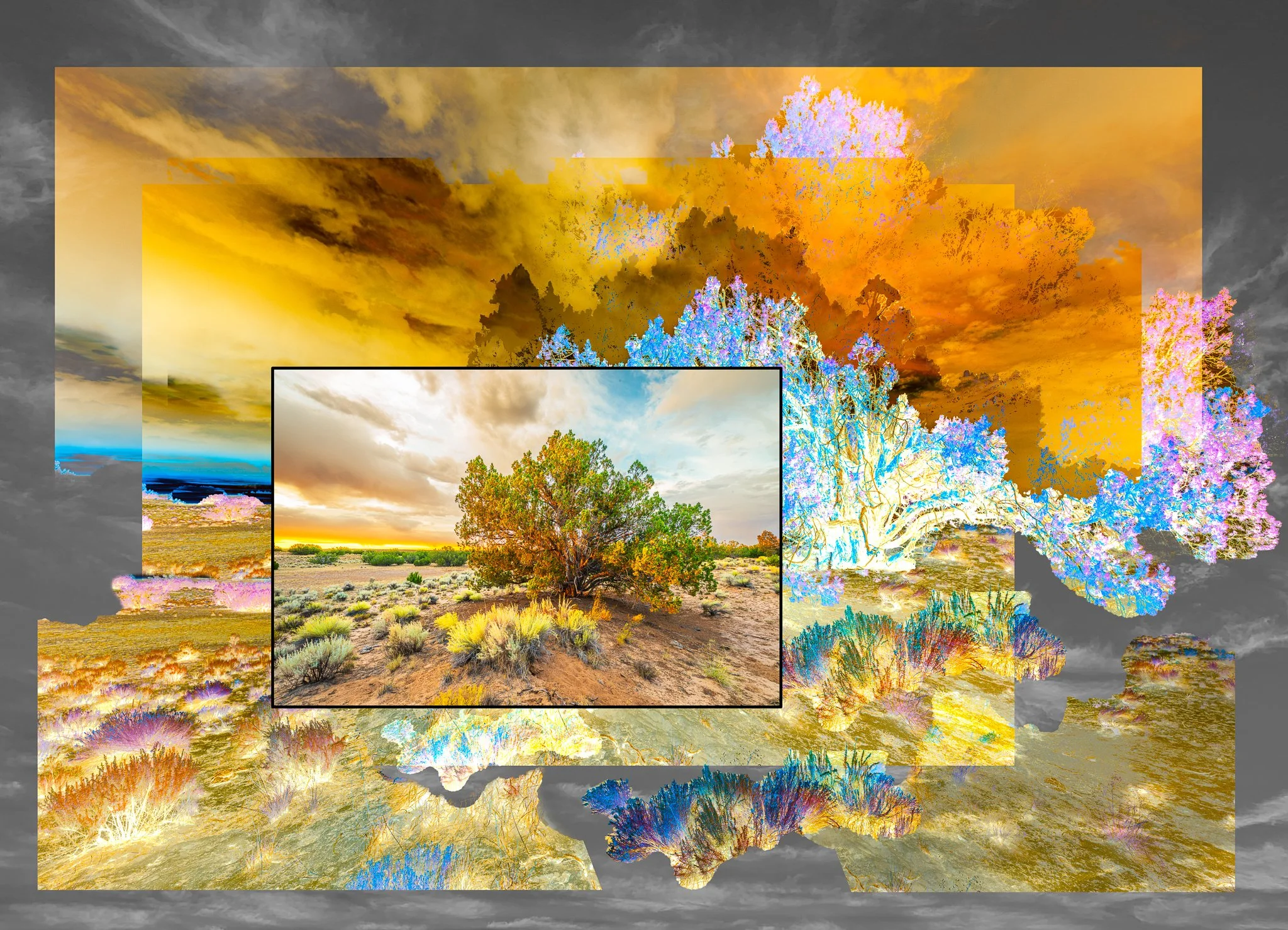
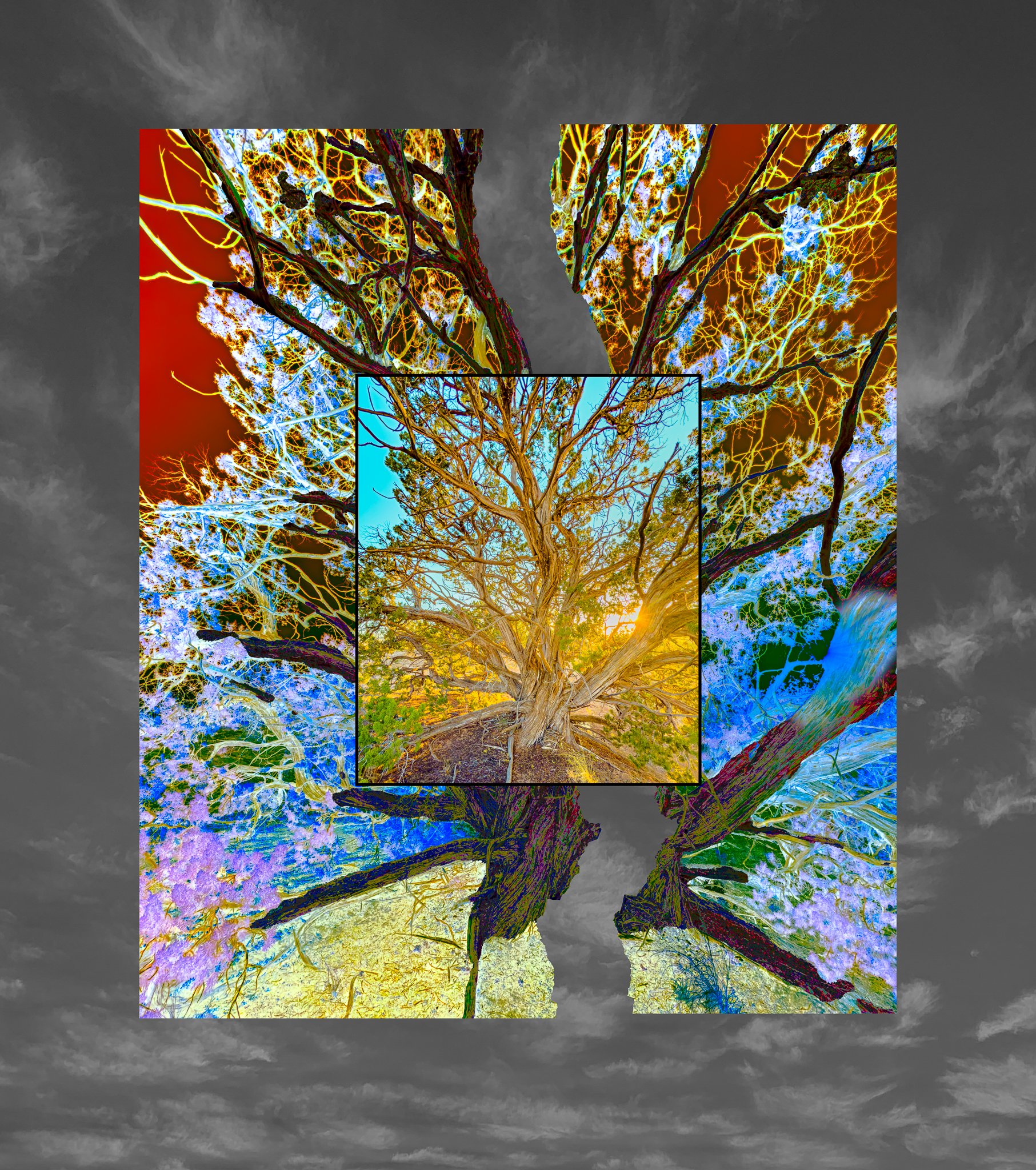
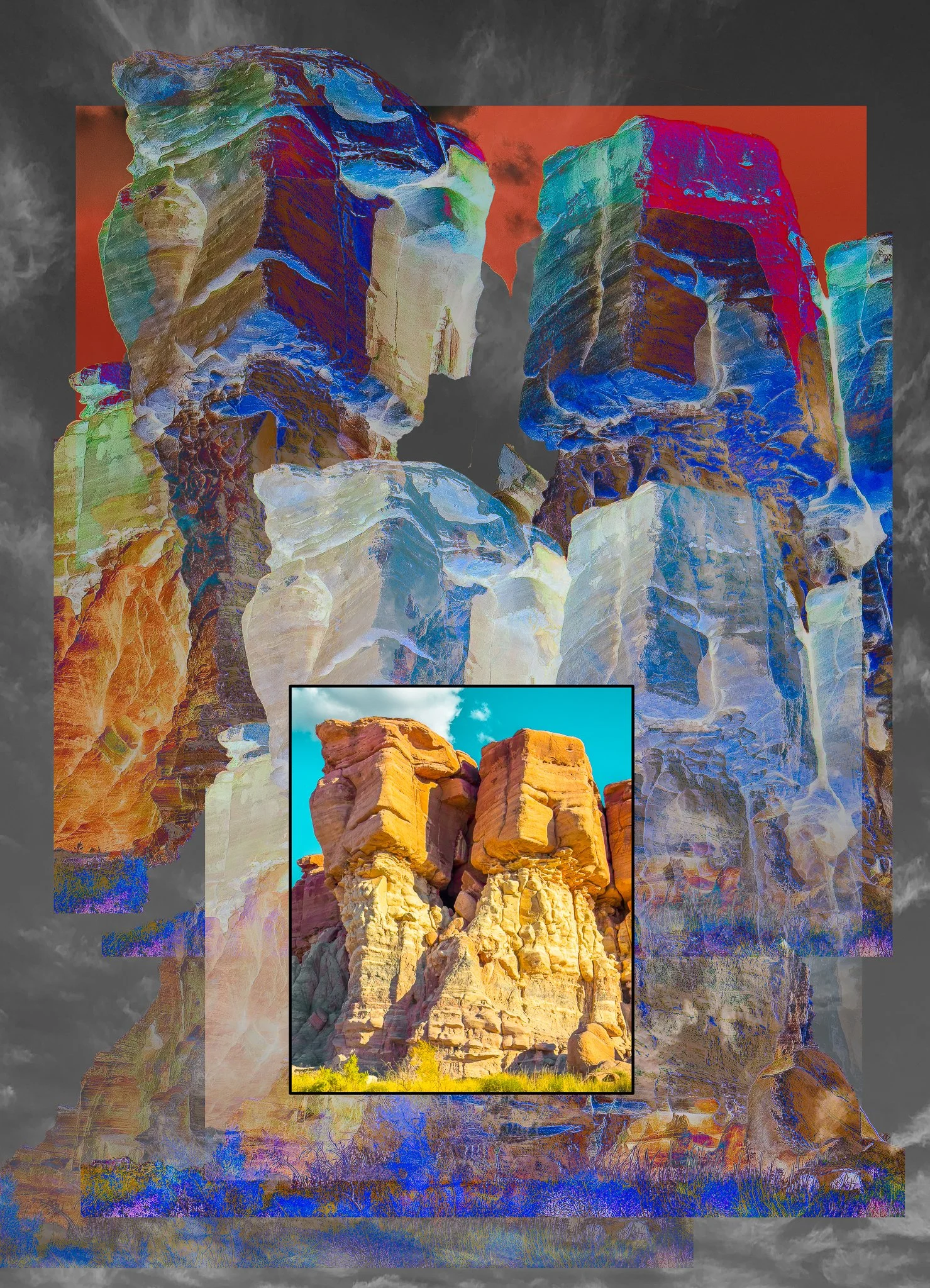
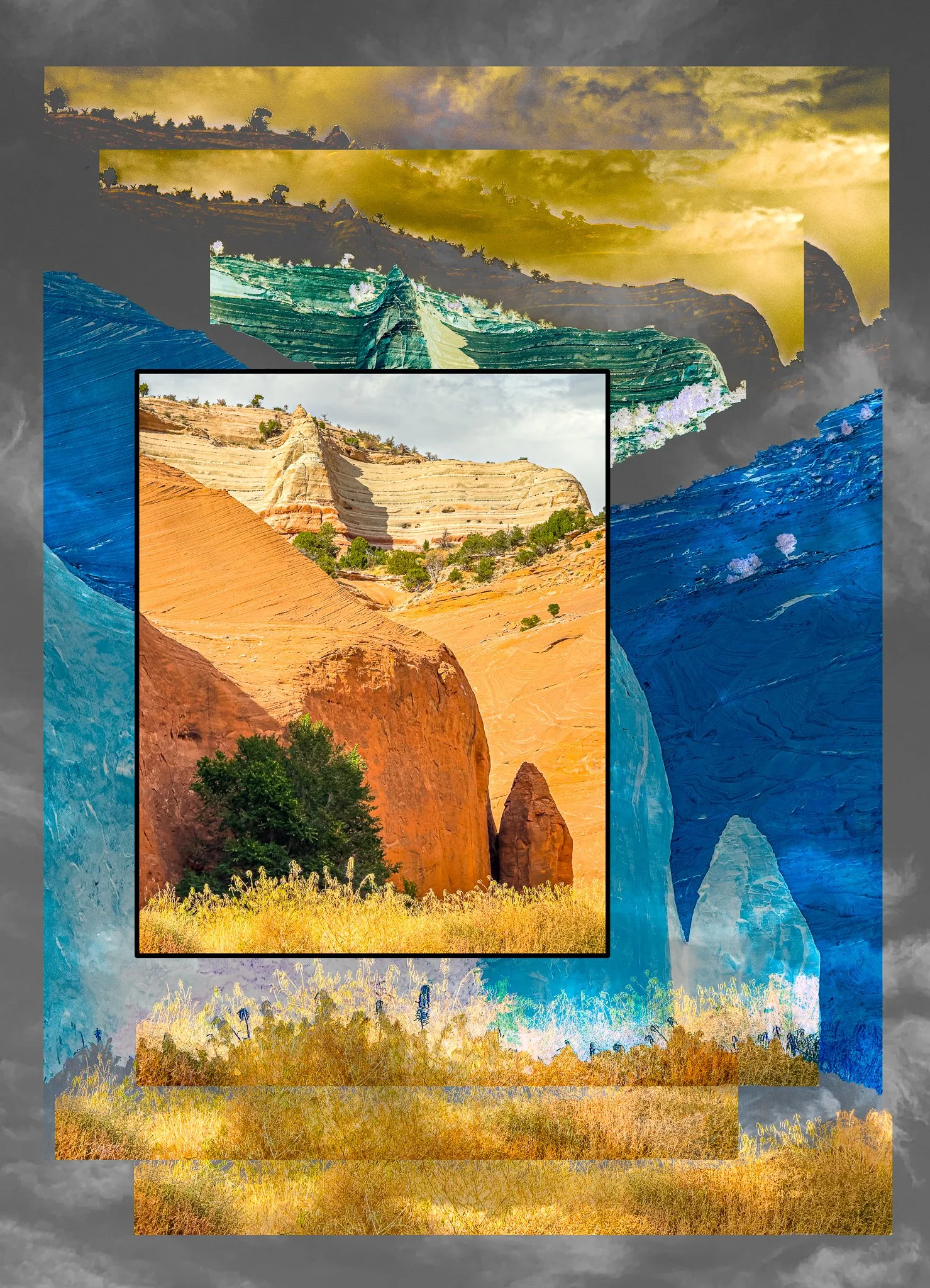
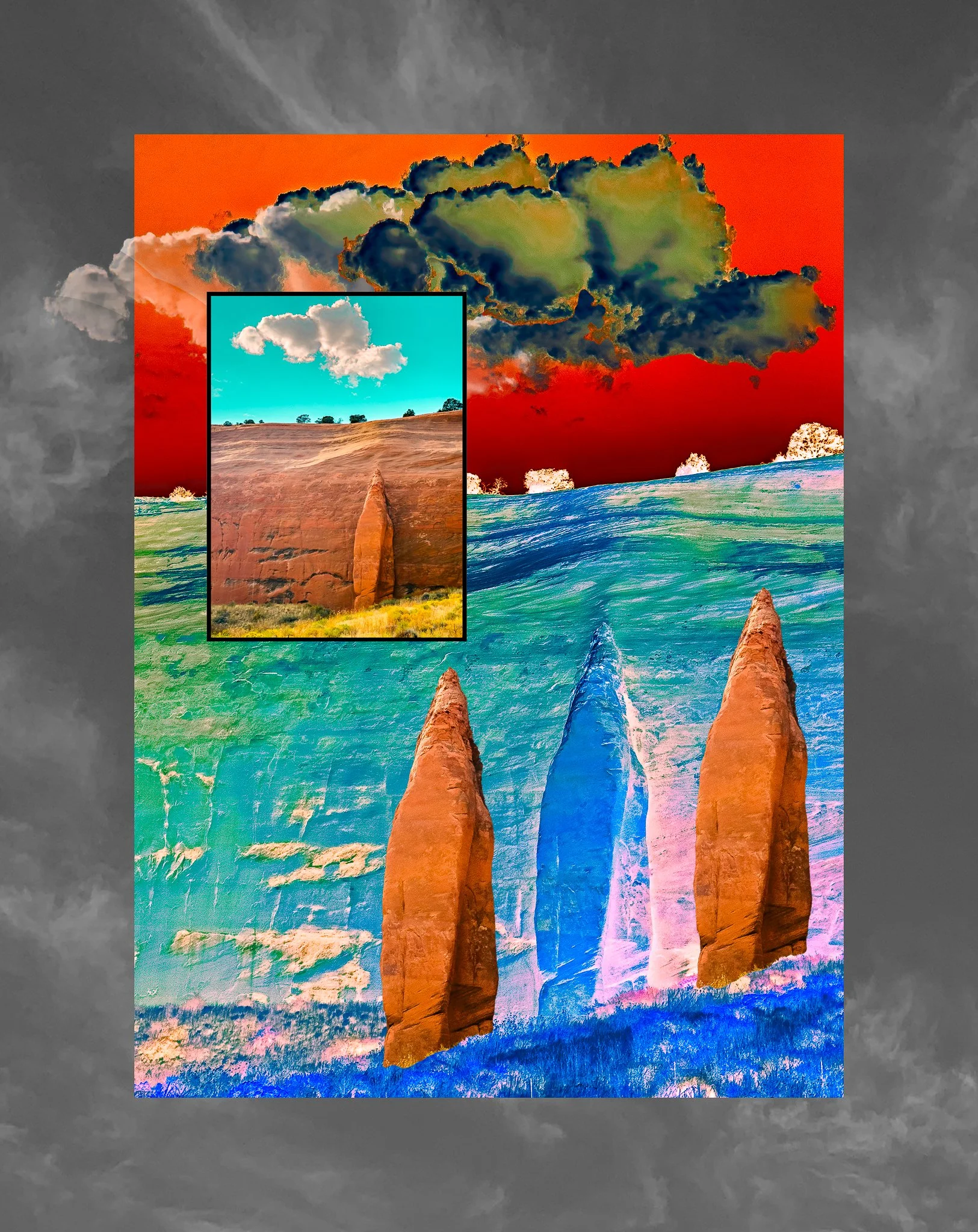
With this new body of work, I aim instead to evoke instability and a sense of passage into an unknown, unfamiliar, and perhaps increasingly perilous world. My intent is to juxtapose familiar traditional landscapes with elements that communicate uncertainty. Each image merges two versions of the same subject: one rendered as a classical landscape, the other a distorted version—using color inversions. The resulting tension between representation and abstraction speaks to a world on the edge: not yet lost, but precarious and shifting.
To suggest temporal distance, I scaled the classical images smaller—reminiscent of photos tucked into old albums. When overlaid onto their larger, inverted counterparts, the contrast evokes a sense of memory versus present or future—a visual question: which version demands our attention? Which feels more real?
I then sought to create a visual rupture—a kind of earthquake. Tearing the inverted image introduced a necessary shock, disrupting its surface and inviting deeper inquiry. The smaller, more realistic image became a memory fragment, floating above a fractured vision of the present or future. A black frame separates the two images, reinforcing their distinction and suggesting that the past may no longer be recoverable.
To unify the composition, I introduced a desaturated image of open sky with clouds. The clouds suggest space, dislocation, perhaps even ascent into the unknown. They also convey a sense of being unmoored.
Despite the fragmentation and distortion, I found myself drawn to preserve a sense of beauty. Initially, I intended to evoke discomfort—even horror—but gradually softened the work, as if allowing space for adaptation. A measure of richness and beauty became essential: a counterbalance to the anxiety of an unchosen journey. Still, I question whether the final works veer too far toward beauty—perhaps even a beauty reminiscent of the afterlife. If so, then any revulsion becomes fleeting, and we find ourselves once again imagining a possible Eden—albeit a more unfamiliar and fragile one.